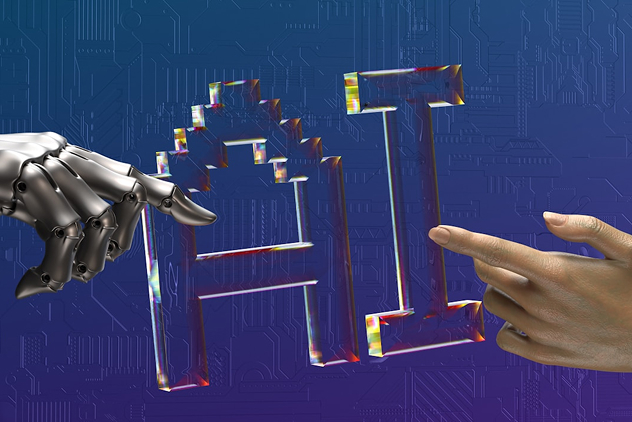

The first time I came across a fully AI-generated influencer account, it felt like a genuine shift. AI-generated images were already familiar, and synthetic video was improving quickly. But seeing a fictional person presented with their own identity, content and social presence raised a bigger question for anyone working with creator content: will AI replace UGC creators?
That question is becoming harder for brands to ignore. AI-generated personalities are already commercially viable; one Spanish virtual model was reportedly earning up to €10,000 a month through brand partnerships. At the same time, AI is moving rapidly into mainstream advertising production. The opportunity is clear: brands can create faster, explore more ideas and remove some of the friction from production. But UGC depends on something less straightforward to automate — trust, relatability and the sense that a real person is behind the message.
So I don’t think the useful question is whether AI is simply good or bad for UGC. For brands, the more important question is where AI improves the creative process, and where replacing the human starts to change what makes UGC effective in the first place.
The Opportunity: AI Can Make UGC Production Smarter
There is already a strong case for using AI throughout the creative workflow. It can help teams develop concepts faster, explore script variations, visualise ideas before production and speed up parts of editing and pre-production. For paid-social teams under constant pressure to produce and refresh creative, those efficiencies can be significant.
McKinsey estimates that generative AI could increase marketing productivity by 5–15% of total marketing spend, partly by reducing the time spent on activities such as ideation and drafting. Platforms are moving in the same direction. Meta is reportedly working towards fully automated ad creation, where advertisers could provide basic inputs and allow AI to generate the creative assets around them.
For brands producing UGC at volume, that creates a real opportunity. AI can make the early stages of creative development quicker and allow teams to explore more routes before committing budget to production.
Where We See AI Adding the Most Value
At UGCContent.com, we see the strongest opportunity in using AI to support the people making the work, rather than immediately replacing them. We already use it to explore script ideas, visualise concepts, develop early creative routes and speed up parts of brainstorming and production.
The benefit is not simply that we can create more. It is that the team can spend more time on the decisions where experience and judgement matter: which creator feels right for the brand, which ideas deserve to move forward, whether the delivery feels believable and whether the final content is good enough to represent the client.
In that sense, AI can make UGC production significantly smarter. But efficiency and judgement are not the same thing.
The Risk: When AI Becomes the Face of the Content
The conversation becomes more complicated when AI moves from helping create the content to becoming the creator itself. From a production perspective, synthetic creators are attractive. They can potentially be adapted quickly, produce multiple variations and remove some of the logistics associated with working with real people.
But brands then need to consider what the audience believes they are watching. If an AI-generated person appears to use, recommend or share an experience with a product, the issue is no longer simply whether the content looks convincing. It becomes a question of credibility and responsibility.
Research reported by Northeastern University found that when virtual influencers make misleading claims, consumers may place more of the blame on the brand than they would when the same behaviour comes from a human influencer. That is an important distinction for brands because the advertiser ultimately owns the relationship with the audience, regardless of how the content was produced.
UGC Is More Than a Visual Style
This is where I think the UGC conversation needs more nuance. UGC does not work simply because the video is vertical, informal or looks as though somebody filmed it at home. The person delivering the message is part of the creative.
A real creator contributes personality, delivery, reactions and genuine interaction with the product. When it works, another person can recognise something of themselves in that creator. AI can become extremely good at recreating the appearance of creator content, but reproducing the relationship between a real person, a product and an audience is a different challenge.
That distinction matters particularly for paid social, where brands are not simply trying to generate views. The creative needs to make somebody stop, believe enough of what they are seeing and take the next step.
Trust and Transparency Will Become More Important
As AI-generated content becomes more convincing, trust will become an increasingly important part of the creative decision. A study from the Nuremberg Institute for Market Decisions found that the same advertisement was rated as less natural and less useful when labelled AI-generated, with lower willingness to click or buy.
That does not mean consumers automatically reject AI advertising. The picture is more complicated than that, and response will likely depend on the product, audience and context. But it does show that introducing AI can change how audiences interpret a message, even when the underlying creative remains the same.
For brands, the strategic question therefore needs to move beyond “Can AI make this?” A better question is “Should AI be the person delivering this particular message?”
There is also a growing regulatory dimension. The UK’s ASA has made clear that an AI disclosure cannot rescue an advertisement that is misleading in the first place. It has also stressed that automation does not transfer responsibilityaway from the advertiser. In the EU, new transparency obligations for certain AI-generated and manipulated content came into effect in August 2026.
For larger brands, AI-generated creative is therefore becoming more than a production decision. It increasingly touches brand trust, governance and legal responsibility too.
Will AI Replace UGC Creators?
I don’t expect real UGC creators to disappear, but I do expect their role to evolve.
A strong UGC creator contributes much more than a face reading a script. They bring instinct, personality and a way of communicating that can make an advertising idea feel natural rather than manufactured. That contribution becomes particularly valuable when the content relies on genuine product interaction, personal experience or relatability.
AI will become increasingly capable of recreating the surface-level characteristics of UGC. For some formats and products, that may be enough. But where the effectiveness of the creative depends on the audience believing in the person and their experience, real creators still offer something fundamentally different.
Human Judgement May Become More Valuable
One of the most interesting consequences of AI is that as producing content becomes easier, producing content itself becomes less scarce. Judgement becomes more important.
Brands will still need people to decide which creator fits the brief, which concepts deserve investment, whether a performance feels believable, whether the content represents the brand properly and whether a piece of creative is actually worth putting media behind.
Those decisions matter even more at scale. Producing 100 pieces of content is not particularly valuable if the standard drops or the creative becomes disconnected from the audience. For us, this is why the stronger future is not simply automated UGC. It is human-led UGC supported by increasingly capable technology.
What This Means for Brand and Paid-Social Teams
The opportunity is not to choose between AI and creators. It is to understand where each one adds the most value.
AI can accelerate ideation, expand the number of creative directions a team can explore and remove repetitive work from production. Real creators remain especially valuable when the concept depends on personality, relatability, lived experience or genuine interaction with the product. Meanwhile, experienced creative teams still need to make the decisions that protect quality and brand fit.
Used together, those capabilities can create a stronger creative system. Technology can handle more of the work it is good at, while people remain responsible for the judgement and relationships that give UGC its value.
So, What Comes Next?
AI will become a much bigger part of creator production. The tools will improve, new formats will emerge and some tasks that currently require people will almost certainly become automated. For brands, there is plenty to be excited about.
But I don’t think the objective should be to automate people out of UGC simply because the technology makes it possible.
There is a long-standing reason personal recommendation remains so influential. Nielsen found that 88% of people trusted recommendations from people they knew more than any other channel in its 2021 global study. The platforms and tools around us change quickly; human behaviour tends to move more slowly.
For us, the opportunity is to use AI wherever it genuinely makes the work better, while protecting the human qualities that made UGC valuable in the first place.
That comes back to a belief we’ve held throughout our time in the creator economy: people influence people.